

Decoding to Discourse guidebooks
Two MTSS guidebooks by Anthony J. Fitzpatrick, Ed.D., for teaching reading and writing across K–12. Forthcoming from Corwin in March 2027.
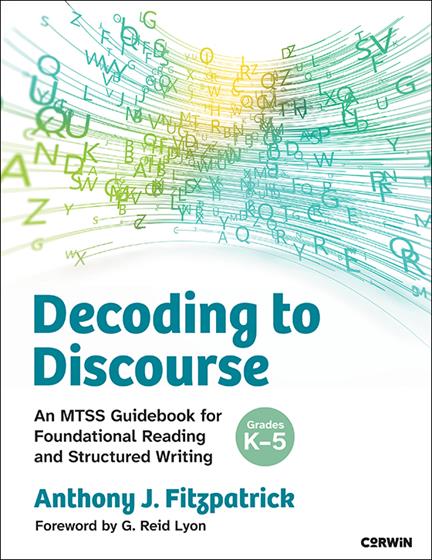
Decoding to Discourse, Grades K–5
An MTSS Guidebook for Foundational Reading and Structured Writing
For elementary teachers, coaches, and interventionists connecting early reading, spelling, and composition.
Preorder the K–5 book from Corwin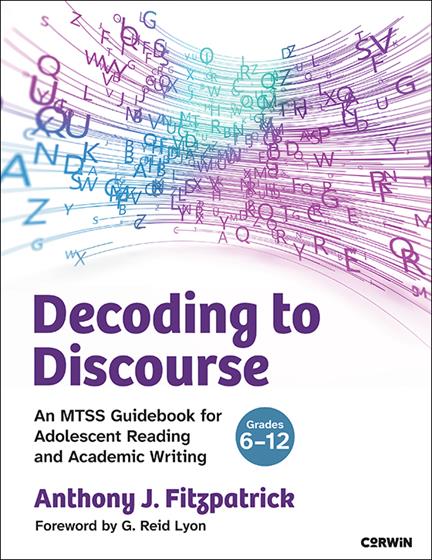
Decoding to Discourse, Grades 6–12
An MTSS Guidebook for Adolescent Reading and Academic Writing
For secondary educators helping students read complex texts and write from evidence across subjects.
Preorder the 6–12 book from CorwinDecoding to Discourse
Reading and writing are two directions of one literacy. What students decode as readers, they encode as writers — and comprehension fuels composition just as composing deepens comprehension. Both climb the same path, from decoding sounds and letters to shaping and critiquing discourse.
One ladder, two directions
The grade bands show typical instructional emphases. Students can work at several levels of language in the same lesson, and instruction responds to the text, task, and learner.
Reading and writing meet at every level of language — mirror skills that grow together from decoding to discourse.
How they reinforce each other
- 1Read like writers. Study how authors craft ideas, structure, and sentences — then borrow those moves in writing.
- 2Write to comprehend. Summarizing, responding, and arguing on the page deepens understanding of what's read.
- 3Share the code. The same phonics, morphology, and syntax knowledge powers both decoding and encoding.
Grounded in the research
Developed by Anthony J. Fitzpatrick, Ed.D. Explore this framework with an educator team through Inedvation professional learning.